


Decades ago, I was involved in the prosecution of a case in which a month-old calf had been forced to walk the auction block after his hind legs had been severed below the hocks. Defenders of the action claimed it was common practice to sometimes sell calves who had been maimed during the birthing delivery. Steel tongs are often used to turn calves around inside the cows when nature has failed to position them properly. Injuries occur and, in this case (as in many), the calf’s hind legs had been severed at the joints. His ears had also been cut off close to his head.
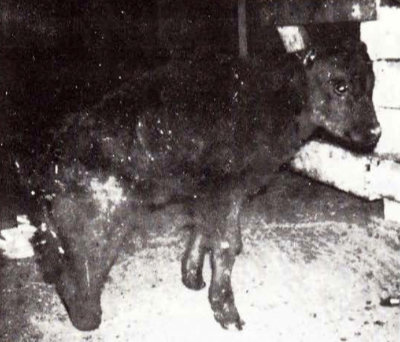 And so here he came: a little black calf, barely a month old, dragging himself along on his front hooves while stumps of hind legs attempted to keep up. Onto the auction block he went, where he was promptly bought by a meatpacking company for $6.
Enjoy your veal—er, meal—America.
Author Alice Walker has described our nation’s consumption of animals as a country indulging itself by “eating misery.”
It’s more than that. It’s the eating of little, innocent, newborn, deprived, shocked, crammed, shackled, and stabbed-to-death creatures who struggle in vain trying to stay alive. Flesh at any price.
America’s addiction to meat is a hideous creature itself with a denial technique the size of its monstrous appetite. Over ten billion living, feeling creatures a year are sacrificed to feed its faces, at the speed of 300 bleeding, kicking, screaming beings a second.
When I wormed my way onto the first dairy farm I went into undercover, I found rows of female calves chained in boxes; males were sent to veal factories. Though the calves were so young they had no teeth, they were fed a bucket of grain each day and only one serving of water. On the day I visited this particular factory, it was 110 degrees in the Northern California valley.
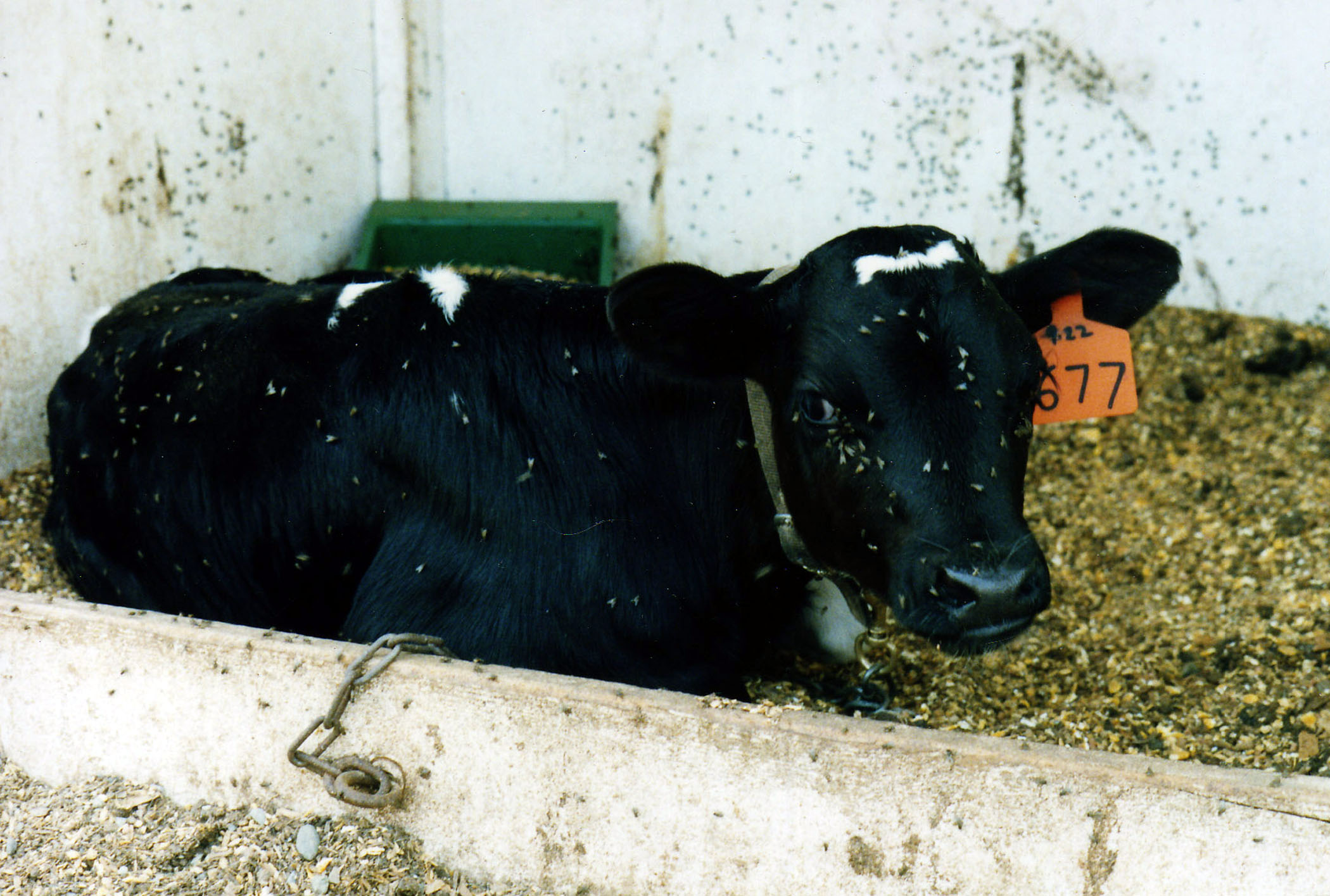
 One calf in particular—#677—caught my attention. She could only have been a day or two old, and was covered with feces and flies so thick she could have been dead and not have been more infested. This was her life: taken immediately away from her mother at birth, chained by the neck in a box the size of a doghouse, raised in closed-confinement fattening and finishing pens, and artificially impregnated when she’s old enough—only to give birth to a baby who will be taken away from her at its birth.
Across the driveway, less than twenty feet from us, a fenced-in cow relentlessly bellowed. She sounded hoarse—as if she’d been crying for hours—and stared in my direction as I allowed the chained calf, her umbilical cord still attached, to suckle my hand before I would resume my picture-taking. It didn’t take long for me to realize the crying cow behind me was the calf’s mother, within yards of her calf, able to see her, but unable to reach her. Who would do something that cruel to animals?
I was a good animal rights activist. I’d been one for years, long before most of the world even knew we existed. I was a vegetarian, too, no less (a ‘freak of nature’ at that time in the eyes of others). I wouldn’t eat anything that had come out of a slaughterhouse—or had fought for its life. But somehow it had eluded me that there was something quite sinister behind the happy cows on the milk cartons. It was in that moment, immersed in the filth and the flies and the heat and feeling the desperation of the suckling calf and hearing the unending crying of her mother, that I knew I could no longer consume anything that came out of a dairy farm, either.
“What are you doing?” I suddenly heard a female voice ask, startling me.
I turned on my heel. “Just taking pictures of these cute little cows,” I answered, hoping she wouldn’t question me further; I looked much younger than I was and often used it to act innocent and naive while I was undercover. “Why are they separated from their mothers like this?”
The woman was a student at the university farm—where they teach young people how to exploit animals. Her answers were reflective of the explanations she’d been given, so she knew way less than I did. “We have to take them away from their mothers the day after they’re born so they don’t drink the milk we need,” she said.
The milk WE need.
Never mind that the cow’s baby needed her milk. Never mind that the cow’s milk was her baby’s milk to begin with. Never mind that no other species on Earth drinks milk into adulthood, let alone the milk from another species. Never mind the irrationality of it, the stupidity, the cruelty, the waste. Just … well, never mind.
One cow and one calf out of tens of millions of cattle (and billions of other consumed animals) is nothing, perhaps, in the grand scheme of things. On the other hand, doesn’t the concept of “speaking for those who can’t” compel us to abandon schemes? Even grand ones?
“End whaling.” “Stop the wolf hunt.” “Go vegan.” Yes, by all means. But along the way, we must also pay close attention—because, you see, animals are not voiceless. They are crying and, if you listen carefully, the sound is deafening. If it means you hoist the calf over the fence and give her back to her mother when no one is looking—because that’s what the animals want—then, by all means, unchain her—and lift!
Except I couldn’t put them through that ordeal a second time. So, what to do? In the end, I guess I do what I’ve always done: my part to educate others about the cruelties inherent in the industry that turns animals into so-called food—and to never forget the calf who was forced to walk to his death on legs that had been torn in half or the cow and her calf whose unending pain represents so many.
Meanwhile, I salute the trench workers, those who reach out to the individual animal, the seemingly unheard voices among us, and set aside the utopia they fight for long enough to pull one more being into the land of the living.


